
-
Simplex A5 Coloured Overlay – Enhance Reading Comfort and Focus
Regular price From £2.49 GBPRegular priceUnit price per -
Simplex A4 Coloured Overlay
Regular price From £2.99 GBPRegular priceUnit price per -
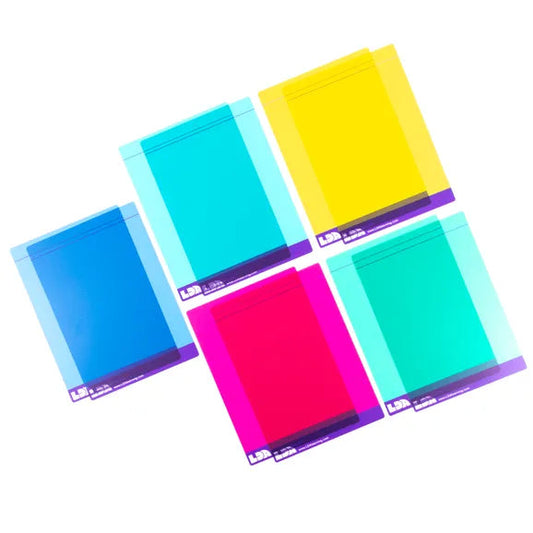
Crossbow A4 Coloured Overlays
Regular price From £3.47 GBPRegular priceUnit price per£23.99 GBPSale price From £3.47 GBPSale -
Irlen Institute Coloured Overlays 9” x 12″
Regular price £5.50 GBPRegular priceUnit price per -
iOO Intuitive Coloured A4 Overlays
Regular price £5.99 GBPRegular priceUnit price per -
Cerium A4 Coloured Overlays
Regular price From £6.99 GBPRegular priceUnit price per -
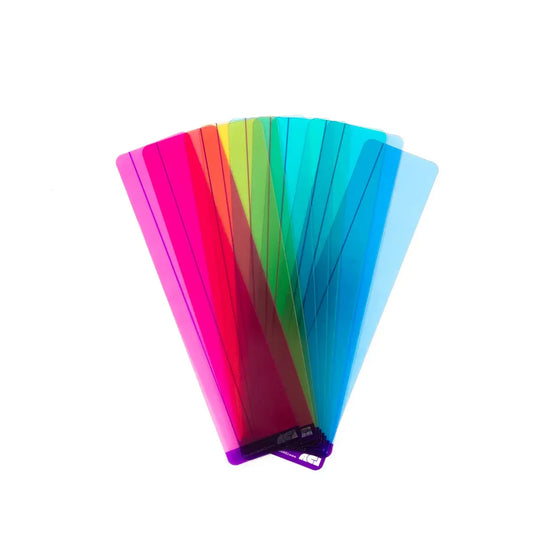
Coloured Reading Overlays - pack of 10
Regular price £16.99 GBPRegular priceUnit price per -
A5 Coloured Reading Overlays – Pack of 10
Regular price £29.99 GBPRegular priceUnit price per -
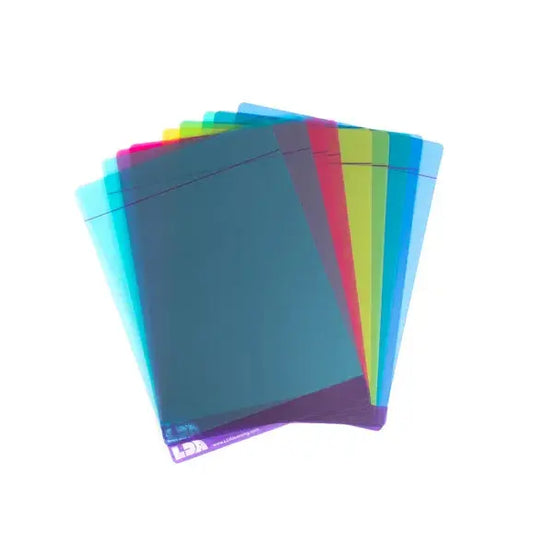
A4 Coloured Reading Overlays – Pack of 10
Regular price £31.99 GBPRegular priceUnit price per

Frequently asked questions
What are coloured overlays used for?
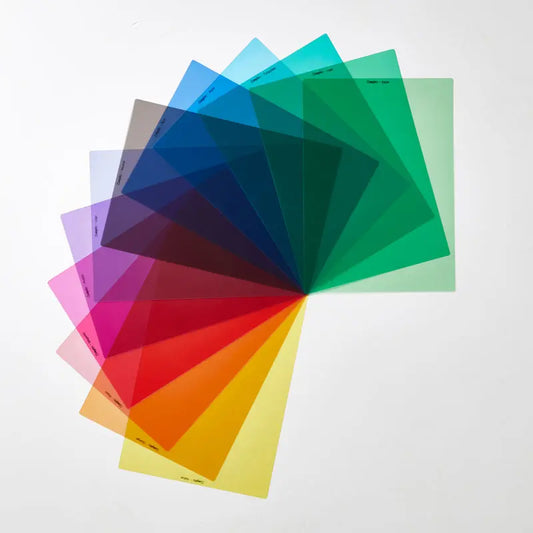
Coloured overlays are used to reduce visual stress when reading. They are tinted, transparent sheets placed over a page so the text appears clearer and steadier, with less glare from the white background. They are commonly used by people who find text seems to move, blur or shimmer, and they suit readers of all ages at school, at work and at home.
Are coloured overlays for dyslexia or visual stress?
Coloured overlays are for visual stress, not dyslexia. Visual stress, also called Meares-Irlen syndrome, is a perceptual condition where text seems to shimmer, move or glare on the page. Dyslexia is a separate, language-based difficulty with reading and spelling. The two often occur together, so many dyslexic readers also benefit from an overlay, but the overlay is addressing the visual stress rather than the dyslexia.
Do coloured overlays help with dyslexia?
Coloured overlays do not treat dyslexia. Dyslexia relates to how the brain processes the sounds in words, and a coloured sheet cannot change that. What overlays can help with is visual stress, a separate condition that makes text appear to move, blur or glare. Visual stress is more common in people with dyslexia, which is why the two are so often linked, but they are not the same thing.
How do I choose the right colour overlay?
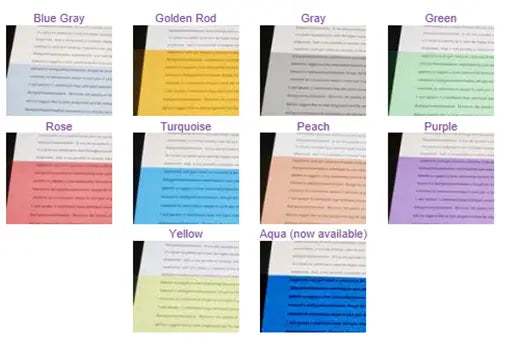
The best colour is the one that makes text feel clearest and most comfortable for that individual reader, so trialling several tints is the right approach. Let the reader compare colours on a normal page and pick the one that settles the text. Choose A4 overlays for whole pages and worksheets, or a reading ruler if the reader prefers to focus on one line at a time. A screening kit can help identify a starting colour.
Can coloured overlays be used in exams?
Coloured overlays can usually be used in exams as part of a pupil's normal way of working, and they are not generally a controlled access arrangement that needs prior approval. Because rules can vary by qualification, the exams officer or SENCO should always confirm the arrangement with the awarding body in advance. Using the same overlay in class and in assessments helps make sure it is established as the pupil's normal practice.
What age are coloured overlays suitable for?
Coloured overlays are suitable for readers of all ages, from young primary pupils through to secondary students and adults. There is no minimum age, although younger children may need an adult to help position the overlay and choose a colour. In the workplace, adults use overlays to reduce eye strain and read for longer, and they form part of reasonable adjustments for visual stress.
How are coloured overlays different from coloured paper or a reading ruler?
A coloured overlay is a clear tinted sheet you lay over existing printed text, so it works with any page. Coloured or tinted paper has the colour built into the page itself and is used for your own printing and writing. A reading ruler is a smaller tinted strip that also helps track a single line at a time. Many readers use a combination depending on the task.