
-
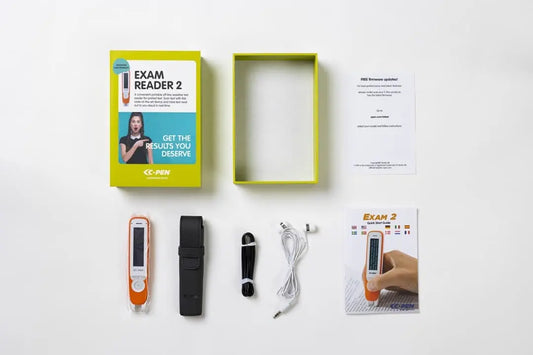
C-Pen Exam Reader 2 - Dyslexia Reading Pen for JCQ-Regulated Exams
Regular price £358.80 GBPRegular priceUnit price per -
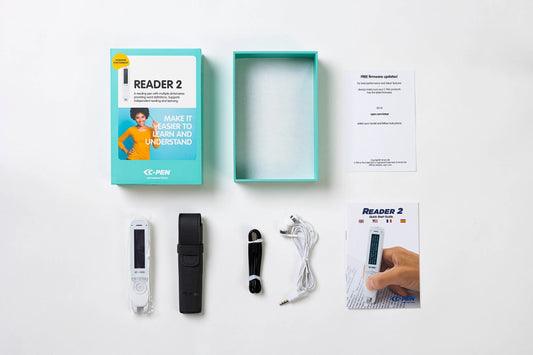
C-Pen Reader 2 — Text-to-Speech Reading Pen for Dyslexia
Regular price £358.80 GBPRegular priceUnit price per -
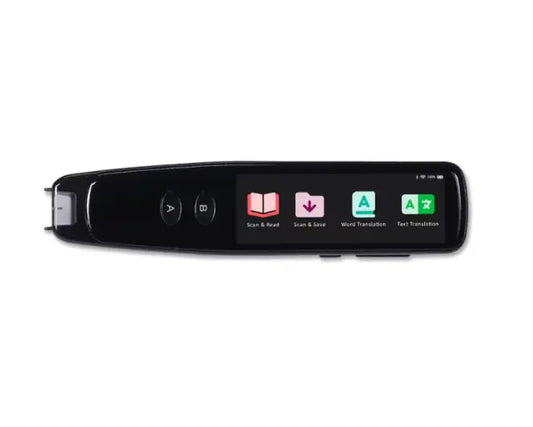
C-Pen Reader 3 – Reading Pen for Dyslexia
Regular price £418.80 GBPRegular priceUnit price per -
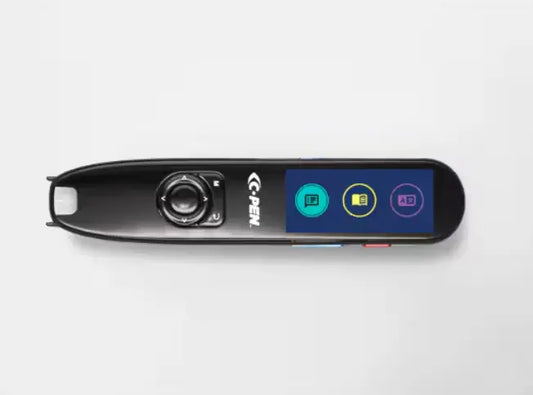
C-Pen Secure Reader 2
Regular price £358.80 GBPRegular priceUnit price per -
e-pens Explore Scanner
Regular price £160.00 GBPRegular priceUnit price per -
C-Pen Lingo 3
Regular price £418.80 GBPRegular priceUnit price per -
C-Pen Reader 2 Class Pack (10 pens)
Regular price £3,468.00 GBPRegular priceUnit price per -
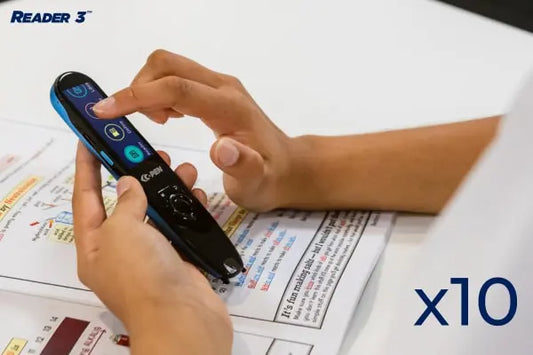
C-Pen Reader 3 Class Pack (10 pens)
Regular price £4,068.00 GBPRegular priceUnit price per£3,888.00 GBPSale price £4,068.00 GBP -
C-Pen Exam Reader 2 Class Pack (10 pens)
Regular price £3,468.00 GBPRegular priceUnit price per



Frequently asked questions
What is a C-Pen and how does it help children with dyslexia?
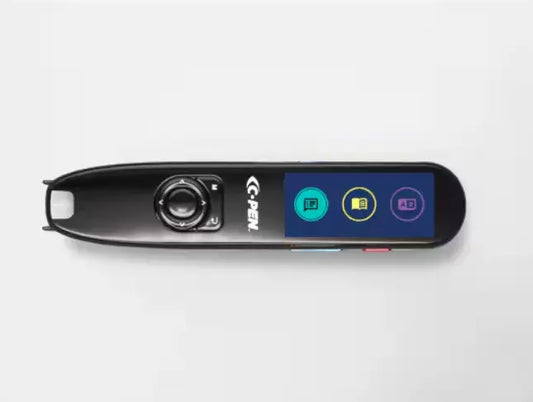
A C-Pen is a handheld electronic reading pen that scans a line of printed text and reads it aloud through a built-in speaker or headphones. For a child with dyslexia, this removes the decoding bottleneck that slows comprehension, so reading age, confidence and curriculum access can all improve. Most C-Pen Reader models also include a built-in dictionary for unfamiliar words.
What is the difference between the C-Pen Reader 2 and the C-Pen Exam Reader 2?
The C-Pen Reader 2 is the everyday reading pen, with a dictionary, voice recorder and scan-to-file features for lessons, homework and reading for pleasure. The C-Pen Exam Reader 2 is the exam-only version: it reads text aloud but has no dictionary, no thesaurus and no translation, which is why it is permitted under JCQ access arrangements for GCSE, A-Level and Functional Skills exams.
Is the C-Pen Exam Reader 2 allowed in GCSE and A-Level exams?
Yes. The C-Pen Exam Reader 2 is designed specifically for use in formal exams under JCQ access arrangements. It does not contain a dictionary, thesaurus or translator, which are the features that would otherwise make a reading pen non-compliant. It must be the candidate's normal way of working in the centre, and centres should follow the current JCQ Access Arrangements and Reasonable Adjustments guidance when deploying it.
Which C-Pen is best for primary school children?
For most primary school pupils with dyslexia, the C-Pen Reader 2 or C-Pen Reader 3 is the right starting point. Both read printed English text aloud, work offline, and can be used independently by children from around Year 3 upwards once shown how to scan. Schools deploying across a year group often choose the C-Pen Reader 2 Class Pack of ten, which works out at £288 per pen.
Can a C-Pen be used at home as well as at school?
Yes. The C-Pen Reader 2 and Reader 3 are designed to travel between school, home and library. They are battery-powered, need no internet connection and store scans on the pen itself. Many parents buy one to support bedtime reading, homework and KS2 or KS3 set texts. Klarna instalment payments are available at checkout if the upfront cost is a barrier.
Do schools need to budget for C-Pens as part of SEND provision?
Many UK schools include reading pens in their SEND provision for pupils with dyslexia, both for everyday lesson access and for exam access arrangements. Costs can be drawn from the school's SEND budget, pupil premium, or Quality First Teaching resourcing depending on local policy. The C-Pen Reader 2 Class Pack and Exam Reader 2 Bundle Class Pack make department-wide deployment more cost-effective than buying single units.
How does a C-Pen compare to a phone or tablet text-to-speech app?
A C-Pen is purpose-built for assistive reading: no notifications, no apps, no internet, and it is permitted in exams in its Exam Reader 2 form. Phone-based text-to-speech is flexible and free, but is not allowed in formal JCQ-regulated exams and brings the distraction of a phone into the classroom. Schools and parents typically use both for different situations.