
-
Crossbow A4 Coloured Overlays
Regular price From £3.47 GBPRegular priceUnit price per£23.99 GBPSale price From £3.47 GBPSale -
Simplex A4 Coloured Overlay
Regular price From £2.99 GBPRegular priceUnit price per -
iOO Intuitive Coloured A4 Overlays
Regular price £5.99 GBPRegular priceUnit price per -
Cerium A4 Coloured Overlays
Regular price From £6.99 GBPRegular priceUnit price per -
Irlen Institute Coloured Overlays 9” x 12″
Regular price £5.50 GBPRegular priceUnit price per -
Coloured Reading Overlays - pack of 10
Regular price £16.99 GBPRegular priceUnit price per -
Simplex A5 Coloured Overlay – Enhance Reading Comfort and Focus
Regular price From £2.49 GBPRegular priceUnit price per -
A4 Coloured Reading Overlays – Pack of 10
Regular price £31.99 GBPRegular priceUnit price per -
A5 Coloured Reading Overlays – Pack of 10
Regular price £29.99 GBPRegular priceUnit price per

Frequently asked questions
What are coloured overlays used for?
Coloured overlays are transparent tinted sheets placed over text to reduce visual stress, glare and word movement for readers with dyslexia or Meares-Irlen Syndrome. They filter specific wavelengths of light reflecting off the page, which calms the high-contrast effect that makes letters appear to shimmer or move. Schools, SENCOs and parents use them as a first-line, low-cost intervention before considering tinted lenses.
How do coloured overlays help dyslexia?
Coloured overlays do not treat dyslexia itself, but they ease the visual stress symptoms that many dyslexic readers also experience. By reducing glare and stabilising the appearance of text, the right tint can lift reading speed, accuracy and reading stamina. For dyslexic pupils who do experience visual stress, an overlay is often the cheapest and quickest adjustment to try first.
Which colour overlay is best for dyslexia and visual stress?
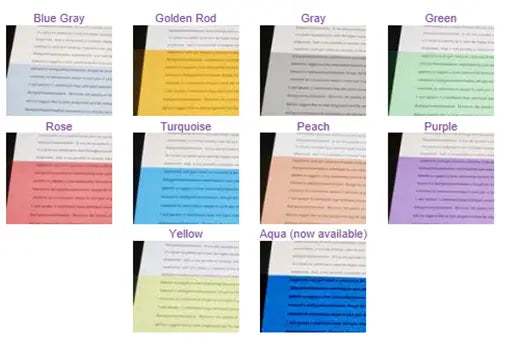
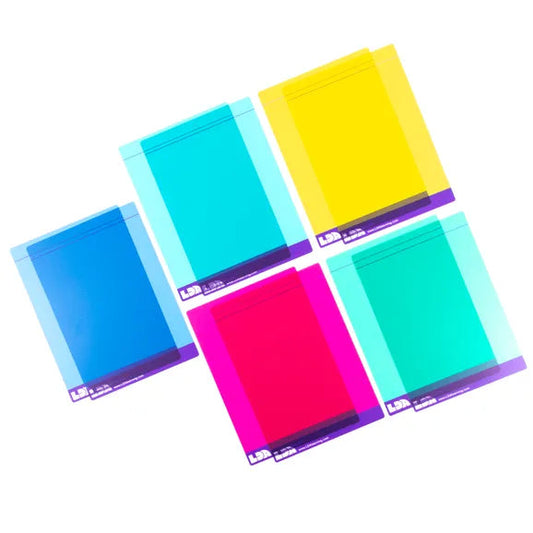
There is no universal best colour - the right tint is highly individual. Aqua, blue, yellow, pink, rose, magenta and grey are all common matches. The standard approach is to trial each colour over the same passage of text and let the reader report which feels most comfortable. Visual stress testing kits are designed for exactly this purpose and are widely used in school SEND screening.
Are coloured overlays a recognised SEND access arrangement in exams?
Coloured overlays are accepted in JCQ-regulated public exams when used as the candidate's normal way of working in the classroom. Schools should record their use in the pupil's SEND profile and apply standard centre-delegated arrangements where appropriate. Overlays do not require an external assessment to be allowed in the exam room, which is why many SENCOs introduce them early. Always check the latest JCQ Access Arrangements guidance for the current academic year. [UNVERIFIED - please check current JCQ AARA wording]
Are coloured overlays suitable for primary and secondary pupils?
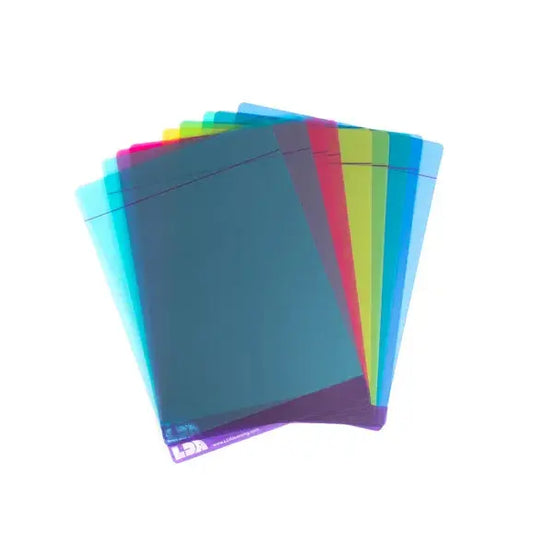
Yes. Coloured overlays are suitable from Year 1 upwards once a child can manage a thin sheet of plastic over their reading. A4 overlays cover textbooks and exam papers, A5 overlays suit reading books and revision guides, and reading rulers suit pupils who only need to track a single line. The same tint can be carried through into tinted exercise books and tinted paper for written work.
Can adults use coloured overlays for studying or work?
Yes. Many adults with dyslexia or visual stress use coloured overlays for studying, professional reading, screen work and exam revision. An A4 or A5 overlay slips into a folder or laptop bag and works on any printed page. For screen-based work, a monitor overlay or screen-tinting software is usually a better fit, and the two can be used together so paper and screen feel consistent.
How do I choose between A4, A5 and reading ruler overlays?
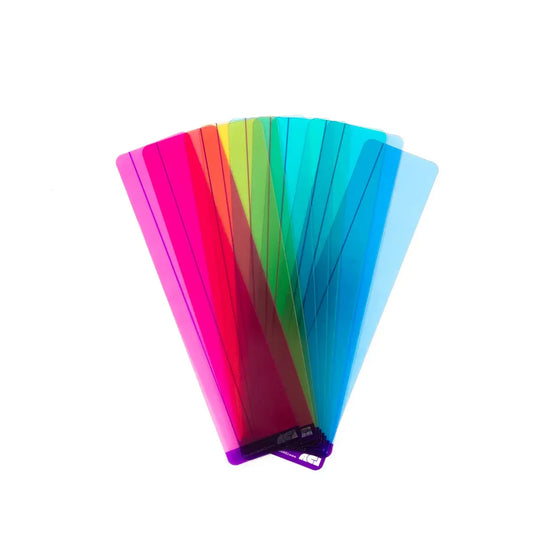
Choose A4 for textbooks, exam papers and reading schemes - the overlay covers a full page in one. Choose A5 for paperbacks, novels and revision guides where an A4 sheet is awkwardly large. Choose a reading ruler when the reader only needs to track one or two lines at a time, or finds a full overlay too distracting. Many schools stock a mix of all three so pupils can pick the format that suits the task.