
-
Making Maths Visual and Tactile
Regular price £14.00 GBPRegular priceUnit price per -
What to do when you can't do fractions, decimals and percentages
Regular price £12.50 GBPRegular priceUnit price per -
The Dyscalculia Resource Book: Games and Puzzles for ages 7 to 14
Regular price £36.99 GBPRegular priceUnit price per -
What to do when you can't learn the times tables
Regular price £12.50 GBPRegular priceUnit price per -
What to do when you can't tell the time
Regular price £12.50 GBPRegular priceUnit price per -
What to do when you can't multiply and divide
Regular price £12.50 GBPRegular priceUnit price per -
The Dyscalculia Toolkit (4th Edition)
Regular price £41.99 GBPRegular priceUnit price per -
The “What To Do When You Can't” titles – Pack of 5 Titles (1 of each title)
Regular price £55.00 GBPRegular priceUnit price per -
What to do when you can't add and subtract
Regular price £12.50 GBPRegular priceUnit price per -
More Trouble with Maths: A complete guide to identifying and diagnosing mathematical difficulties
Regular price £73.99 GBPRegular priceUnit price per -
The Dyscalculia Assessment
Regular price £39.99 GBPRegular priceUnit price per -
Dyscalculia: Action plans for successful learning in mathematics
Regular price £38.99 GBPRegular priceUnit price per -
The Maths and Dyscalculia Assessment – Identify Gaps & Plan Support
Regular price £49.99 GBPRegular priceUnit price per -
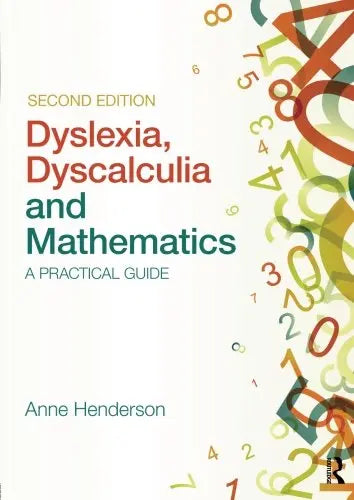
Dyslexia, Dyscalculia and Mathematics A practical guide, 2nd Edition
Regular price £34.99 GBPRegular priceUnit price per -
Succeed with Dyscalculia - Book 4: Understanding Addition and Subtraction (Part A)
Regular price £29.99 GBPRegular priceUnit price per -
Succeed with Dyscalculia - Book 3: Place Value to 1000
Regular price £33.99 GBPRegular priceUnit price per




Frequently asked questions
What is the best book on dyscalculia for teachers?
The Dyscalculia Toolkit by Ronit Bird is one of the most widely used dyscalculia books for teachers. It offers 220 activities and 55 games for learners aged 6 to 14, with downloadable resources. For deeper background, Effective Teaching Strategies for Dyscalculia and Learning Difficulties in Mathematics links teaching to cognitive neuroscience. Choose by the age of your learners and how much theory you want.
What strategies help students with dyscalculia?
The strategies that help students with dyscalculia most are concrete, visual and carefully sequenced. Teachers start with objects such as rods, beads or tens frames, move to pictures and then to written numbers, and break each skill into small steps. Short, regular practice, extra time and reduced question numbers lower maths anxiety. Books such as Succeed with Dyscalculia build these steps in.
How do you teach a child with dyscalculia?
You teach a child with dyscalculia by building number sense first, using hands-on materials and small steps that guarantee success. Focus on key facts such as number bonds to 10 and doubling, and connect each new idea to something the child already knows. Keep sessions short and regular, and praise effort. Strategy books like Making Maths Visual and Tactile give ready-made activities.
Are there dyscalculia books for parents?
Yes, several dyscalculia books suit parents. The What to do when you can't series explains times tables, time and fractions in short, multi-sensory steps that work at home. Maths Learning Difficulties, Dyslexia and Dyscalculia by Steve Chinn is written for teachers and parents of children with specific learning difficulties in maths. Talk to your child's teacher or SENCO so home practice matches school.
Can a book diagnose dyscalculia?
No, a book cannot diagnose dyscalculia on its own, but assessment books help teachers spot gaps and decide whether to refer. The Maths and Dyscalculia Assessment covers pupils aged 6 to 18, and More Trouble with Maths guides identifying mathematical difficulties. A formal diagnosis is made by a qualified specialist assessor or educational psychologist, and the results can inform SEN support or an EHCP.