
-
 Sold out
EasyRead Watches Rainbow Past & To
Regular price £24.99 GBPRegular priceUnit price per -
What's the Time Geared Clock
Regular price £9.99 GBPRegular priceUnit price per -
Student Clock - Single
Regular price £4.00 GBPRegular priceUnit price per -
Beat the Clock - Stopwatch Set
Regular price £16.99 GBPRegular priceUnit price per£16.99 GBPSale price £16.99 GBP -
EasyRead Watch Waterproof Past & To - Purple Strap (Rainbow Face)
Regular price £24.99 GBPRegular priceUnit price per -
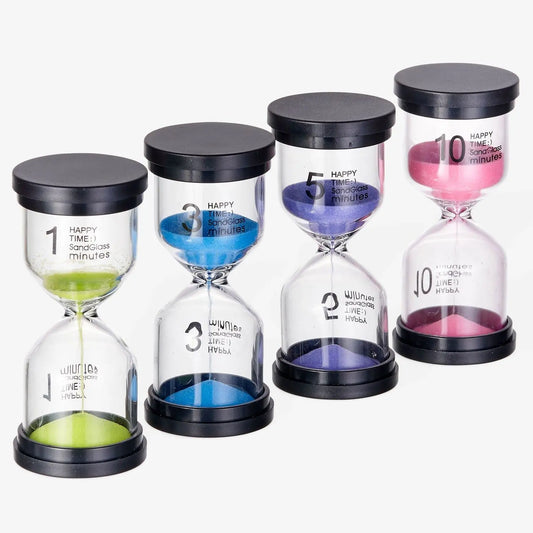
4 Set Hourglass Sand Clock, Kitchen Accessory Perfect
Regular price £11.99 GBPRegular priceUnit price per -
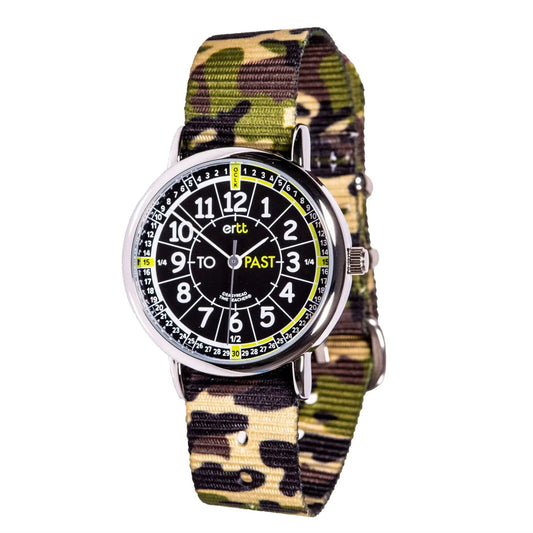
EasyRead Watch Past & To - Green Camo Strap (Black Face)
Regular price £23.99 GBPRegular priceUnit price per -
The Starlight Watchmaker
Regular price £5.33 GBPRegular priceUnit price per£7.99 GBPSale price £5.33 GBPSale -
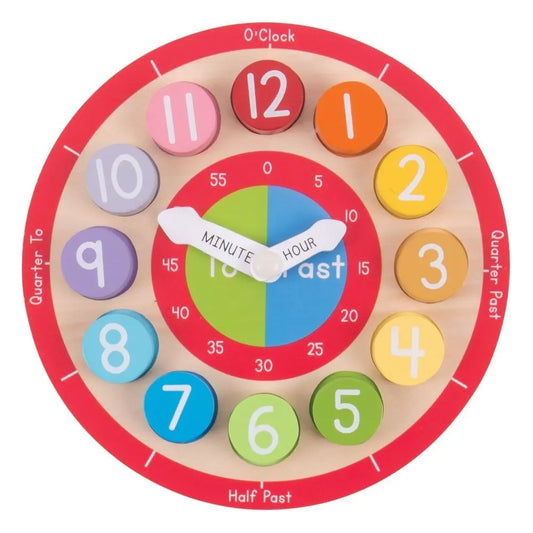
Teaching Clock
Regular price £15.99 GBPRegular priceUnit price per£0.00 GBPSale price £15.99 GBP -
EasyRead Watch Waterproof Past & To - Navy Blue Strap (Red & Blue Face)
Regular price £36.00 GBPRegular priceUnit price per -
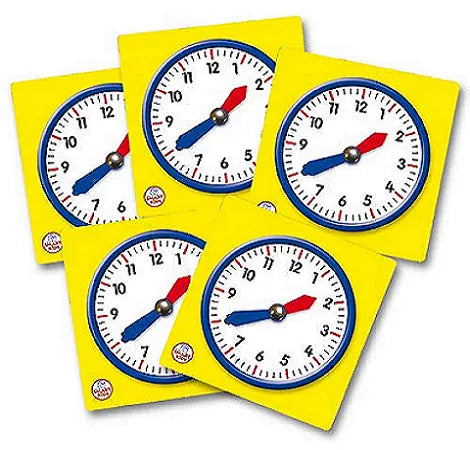
24 Hour Write on Wipe off Clock Dials (Pk of 5)
Regular price £10.99 GBPRegular priceUnit price per -
EasyRead Watch Past & To - Blue Camo Strap (White Face)
Regular price £25.00 GBPRegular priceUnit price per -
EasyRead Watch Standard 12/24 Hour - Purple Strap (Rainbow Face)
Regular price £24.99 GBPRegular priceUnit price per -
Calendar, Clock Days and Months
Regular price £15.99 GBPRegular priceUnit price per -
EasyRead 29cm Wall Clocks Past & To English Language (Rainbow Face)
Regular price £25.00 GBPRegular priceUnit price per -
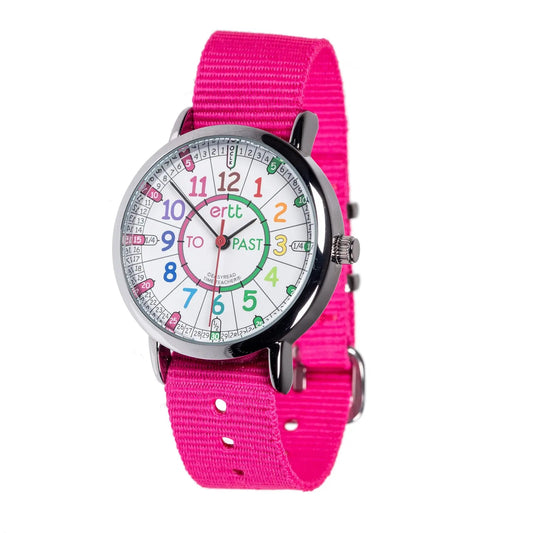
EasyRead Watch Rainbow Past & To - Pink Strap (Rainbow Face)
Regular price £24.99 GBPRegular priceUnit price per



Frequently asked questions
What is a time teacher watch?
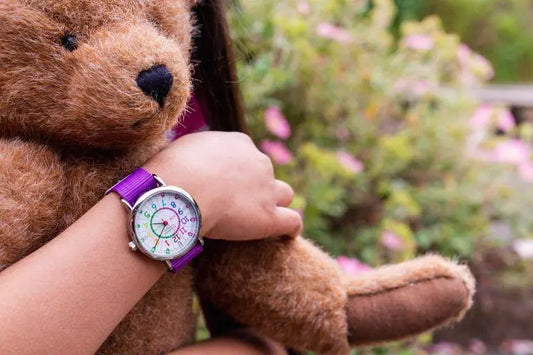
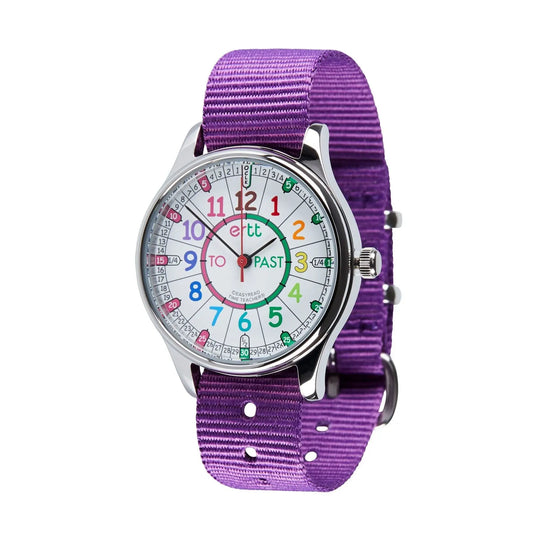
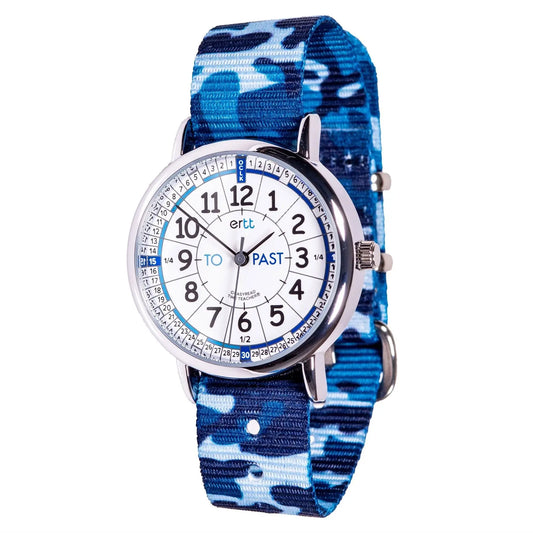
A time teacher watch is a wristwatch with a clock face designed to teach a child how to read analogue time. The minutes are printed as words on the dial - "5 past", "10 past", "quarter to" - in the positions where the minute hand actually sits, so the child reads the time directly instead of converting numbers in their head. They are widely used to support children with dyscalculia and dyslexia.
How do time teacher watches help children with dyscalculia?
Dyscalculia affects number sense, sequencing, and the link between symbols and quantities. A standard clock face asks a child to count in fives, hold the position in mind, and translate it into a time phrase - a lot of working memory load. A time teacher watch removes the calculation step by printing the minute words on the face, so the child can read the time as a sentence rather than work it out. The Past and To layout also matches the way British English actually describes time.
Are time teacher watches good for children with dyslexia?
Yes. Dyslexia often slows word retrieval, so building a clear visual link between a position on the dial and the spoken time phrase reduces the cognitive load. The colour-coded Past and To halves give a consistent left or right cue, and the printed words act as a built-in prompt. Many dyslexic children also experience co-occurring dyscalculia or working-memory difficulties, so a time teacher watch is a quiet daily support that does not single them out at school.
What age should a child start learning to tell the time?
In the National Curriculum for England, time-telling is introduced in Year 1 (o'clock and half past), extended in Year 2 to quarter past and quarter to, and pushed to five-minute intervals and 24-hour time across Year 3 and Year 4. In practice, a time teacher watch is appropriate from around age 5 and remains useful for any child still finding analogue clocks ambiguous - which for many SEND learners can be well into Key Stage 2 or beyond.
What is the difference between a teaching clock and a geared clock?
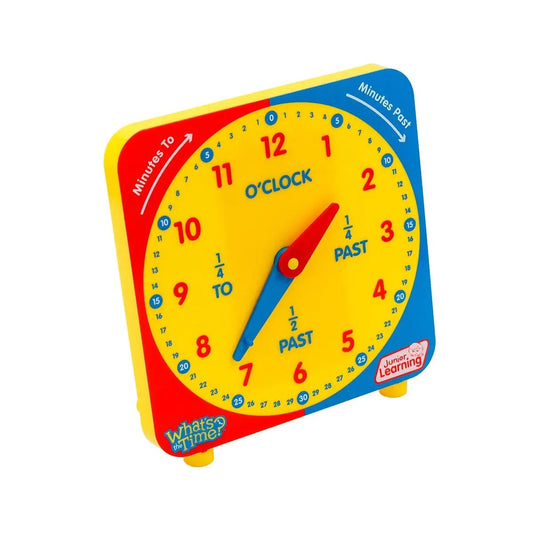
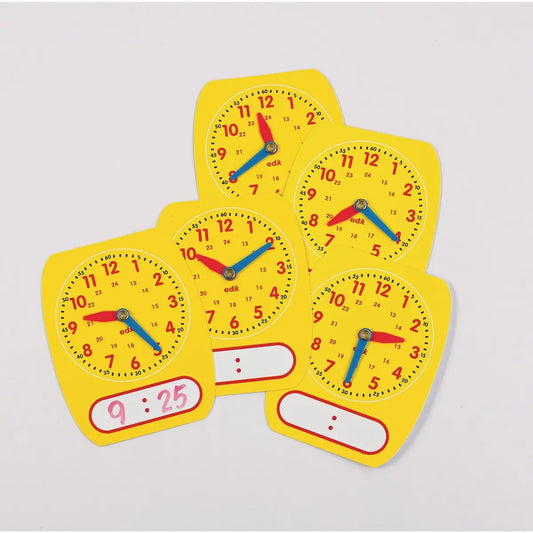
A teaching clock is any clock designed for instruction rather than just decoration - usually with extra-clear numbers, colour-coded hands, and minute markings on the dial. A geared clock is a specific type where the hour and minute hands are mechanically linked, so when a teacher or parent moves the minute hand round, the hour hand moves correctly in proportion. Geared clocks are particularly useful for teaching how the two hands relate, which is one of the harder concepts for a child with dyscalculia.
Can schools order time teacher clocks in bulk?
Yes. Schools, multi-academy trusts, and local authorities can order in bulk on a school purchase order with 30-day credit terms, and we offer free delivery on orders over £100. For class sets of EasyRead Time Teacher watches, large wall clocks for SEND classrooms, or wipe-clean dial packs, call 01394 671 818 or email sales@thedyslexiashop.co.uk for a tailored quote.
How does the EasyRead Time Teacher Past and To system work?
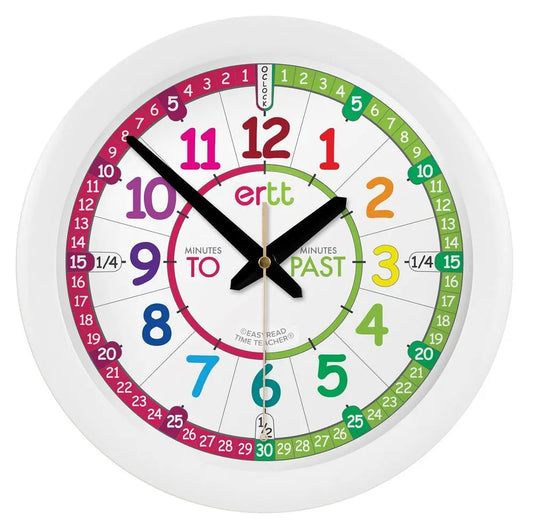
The EasyRead Time Teacher face splits the dial into a "Past" half on the right and a "To" half on the left, with the minutes printed as words ("5 past", "10 past", "quarter past", "20 to", "10 to") next to where the minute hand sits. The child first reads the hour number, then reads the minute word the long hand is pointing at. Once that pattern is secure, the system progresses to the Standard 12 / 24 Hour face as the child moves towards a conventional watch.