

Patoss
Access Arrangements in Examinations: A Practical Guide (8th Ed.)
Access Arrangements in Examinations: A Practical Guide (8th Ed.)
SKU:BK2590
Couldn't load pickup availability


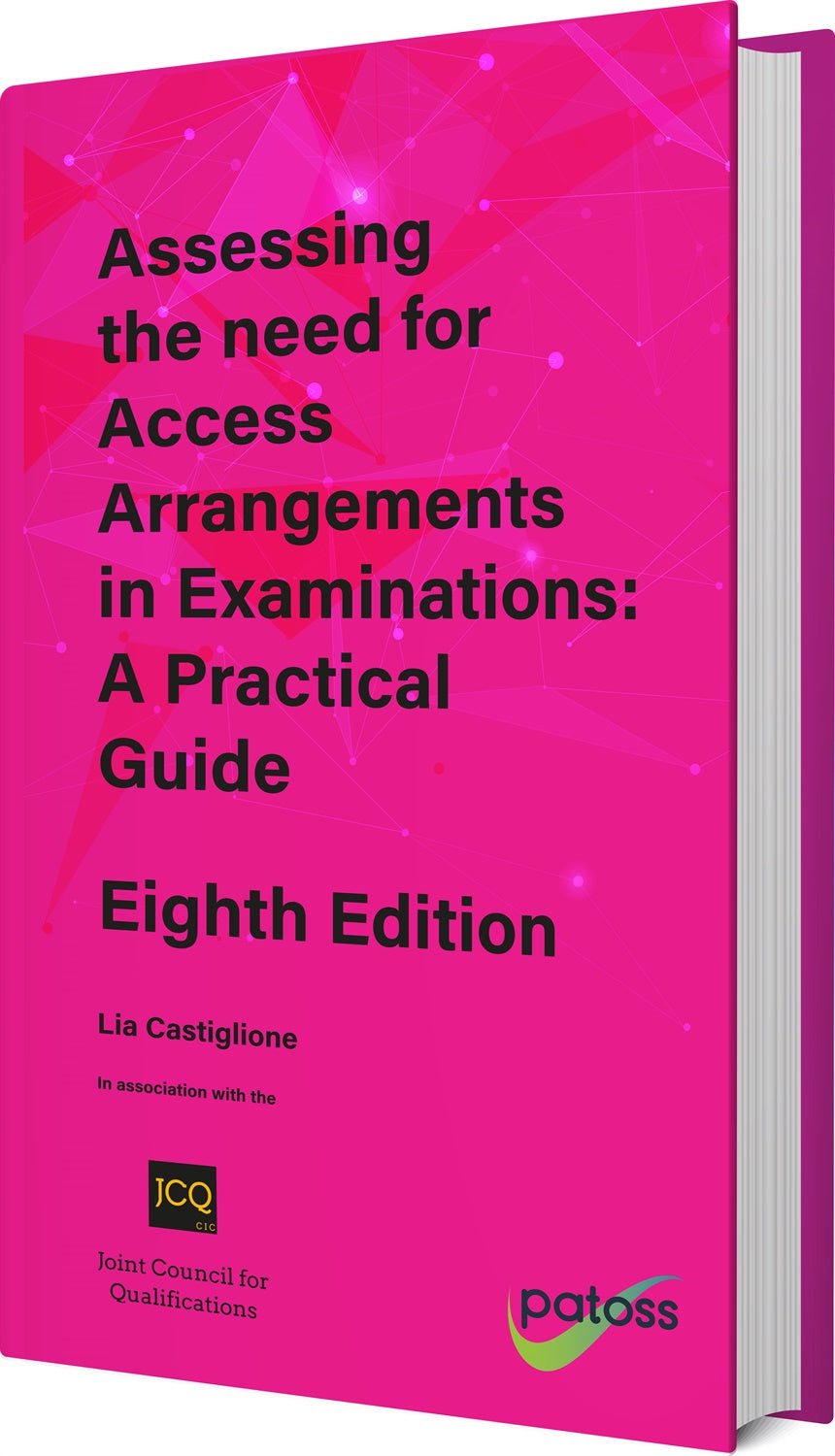
A trusted, practical guide to access arrangements in examinations
Assessing the Need for Access Arrangements in Examinations: A Practical Guide is Patoss's long-standing reference for school and college staff who assess, evidence and apply access arrangements for pupils with special educational needs and disabilities (SEND). The 8th edition supports SENCOs, access arrangements coordinators and specialist assessors in understanding the current regulations and applying them confidently in real school and college settings.
Everything a SEND team needs in one working tool
The guide combines detailed explanation with case studies, chapter summaries and frequently asked questions, so it works both as a reference guide and a day-to-day working tool. The 8th edition has been fully updated to reflect the strengthened whole-centre approach to access arrangements, the latest JCQ forms, and the increased importance of centre-based evidence, teacher feedback and a pupil's normal way of working.
For schools and colleges
- Supports whole-centre consistency across departments when identifying and evidencing access arrangements needs.
- Gives practical guidance on evidencing 25% extra time using centre-based evidence rather than test scores alone.
- Includes a fully updated list of assessment tests and subtests, with clearer guidance on how each may be used.
- Covers supervised rest breaks, assistive technology, computer readers, scribes and word processors.
- Adds a new chapter on student voice and a fully updated chapter on access arrangements for candidates with English as an additional language (EAL).
For pupils with SEND, the guide helps ensure that access arrangements decisions are built on genuine, evidenced need rather than guesswork, reflecting how a pupil normally works in lessons and assessments across the school.
The accompanying online resource area has also been updated and expanded, giving centres, SENCOs, coordinators and assessors further practical resources to support the guidance in the book.
The 8th edition is currently available to pre-order ahead of publication. Reserve your copy through The Dyslexia Shop and your school or college will have the fully updated guide as soon as it becomes available.
- 8th edition of Patoss's practical guide to access arrangements in examinations.
- Explains the strengthened whole-centre approach to access arrangements, supporting consistent practice across departments.
- Updated guidance on completing current JCQ forms.
- Practical guidance on evidencing 25% extra time using centre-based evidence and teacher feedback.
- Fully updated list of assessment tests and subtests, with clearer guidance on how each may be used in an assessment.
- Updated coverage of supervised rest breaks, assistive technology, computer readers, scribes and word processors.
- New chapter on student voice, covering how candidates' own views should inform access arrangements decisions.
- Fully updated chapter on access arrangements for candidates with English as an additional language (EAL).
- Updated information on Access Arrangements Online and JCQ centre inspections.
- Includes practical case studies, chapter summaries and frequently asked questions throughout.
- Includes access to an updated and expanded online resource area for centres, SENCOs, coordinators and assessors.
- Written for adult professionals working in schools and colleges, not intended for pupil use.
- The trusted go-to guide for access arrangements. Long relied on by assessors and SENCOs, the 8th edition explains how to identify and evidence access arrangements decisions with confidence.
- Built around real school and college practice. Case studies, chapter summaries and frequently asked questions turn JCQ regulations into a practical, day-to-day working tool for SEND teams.
- Fully updated for the strengthened whole-centre approach. Covers the latest JCQ forms, centre-based evidence requirements, and how to evidence 25% extra time.
- New chapters that reflect current practice. Includes a new chapter on student voice and a fully updated chapter on access arrangements for candidates with English as an additional language.
- Published by Patoss, the specialist SpLD teaching association. Access arrangements always remain at the discretion of the exam centre, decided in line with current JCQ regulations.
Delivery and Returns
Standard UK delivery applies. See our Delivery and Returns page for full details.
- What is Assessing the Need for Access Arrangements in Examinations: A Practical Guide?
It is Patoss's practical handbook, now in its 8th edition, for school and college staff who assess and evidence access arrangements for pupils with SEND. It combines regulatory explanation with case studies, summaries and frequently asked questions. - Who is this guide written for?
It is written for SENCOs, access arrangements coordinators, specialist assessors and exam officers working in schools and colleges. It supports anyone involved in the access arrangements process, from identifying need through to evidencing decisions. - What is new in the 8th edition?
The 8th edition reflects the strengthened whole-centre approach to access arrangements. It includes updated JCQ forms guidance, a new chapter on student voice, a fully updated EAL chapter, and updated advice on evidencing 25% extra time. - Can this guide help schools evidence access arrangements for pupils with SEND?
Yes. It explains how to build centre-based evidence, incorporate teacher feedback, and reflect a pupil's normal way of working when deciding on access arrangements. Access arrangements are always decided by the exam centre in line with current JCQ regulations. - Does this guide cover assistive technology and word processors in exams?
Yes, it includes updated guidance on assistive technology, computer readers, scribes and word processors. Whether any of these can be used in a specific exam is decided by the candidate's exam centre in line with current JCQ regulations. See the JCQ access arrangements page for full guidance. - When will the 8th edition be available?
The 8th edition is due to publish later this summer and is currently available to pre-order. Ordering now reserves your copy for despatch as soon as it is published. - Do I need to be a Patoss member to buy this guide from The Dyslexia Shop?
No, you do not need to be a Patoss member to purchase this guide through The Dyslexia Shop. It is available to any school, college or professional who needs a copy. - What age range or career stage is this guide suitable for?
This guide is written for adult professionals working in schools and colleges, such as SENCOs and assessors. It is not designed for pupil use.