

Bloomsbury Publishing PLC
The Neuroinclusive Educator : Creating classrooms where every learner can thrive
The Neuroinclusive Educator : Creating classrooms where every learner can thrive
SKU:BK2592
Couldn't load pickup availability


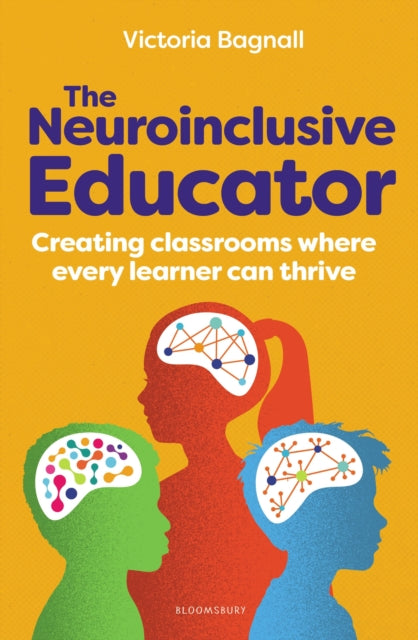
The Neuroinclusive Educator by Victoria Bagnall is a practical handbook for creating classrooms where pupils with ADHD, autism, and other learning differences can thrive, published by Bloomsbury Education. It brings together research on how brains work differently with ready-to-use classroom strategies, giving teachers and parents a shared understanding of what neuroinclusive practice looks like in real primary and secondary settings.
The book sets out practical tools such as self-regulation menus, body mapping, and mindfulness activities, alongside primary and secondary case studies, reflection prompts, and quick-win solutions. Its focus on building pupils' self-regulation, executive function, and flexible thinking speaks directly to the everyday classroom and home challenges faced by children with ADHD and autistic children, rather than offering theory alone.
For schools
- Gives teachers, SENCOs, and trust buyers a single, practical resource covering ADHD and autism-friendly classroom strategies, rather than several separate guides.
- Includes primary and secondary case studies, making it useful across a whole school or multi-academy trust rather than one key stage alone.
- Supports Quality First Teaching and the graduated approach to SEND, with reflection prompts that fit naturally into staff CPD or department meetings.
- Suitable for both experienced teachers and those early in their careers who want a practical starting point for neuroinclusive practice.
For parents and home use
- Helps parents understand the kind of self-regulation and executive function strategies their child's school may already be using, so home and school approaches can align.
- Useful for home-educating parents who want a research-informed, practical guide to supporting a child with ADHD or an autistic child through learning.
- The self-regulation menus and body mapping activities can be adapted for use at home, not only in the classroom.
- Written in accessible, practical language rather than dense academic text, making it approachable for parents without a teaching background.
For children with ADHD, the book's focus on executive function and self-regulation speaks directly to some of the most common everyday classroom challenges, such as managing attention, transitions, and impulse control. For autistic children, its emphasis on understanding sensory needs and reducing barriers to learning supports a classroom environment built around genuine inclusion rather than simply managing behaviour.
Building self-regulation and executive function skills through structured, whole-classroom strategies is widely supported as effective practice for neurodivergent pupils, and having case studies alongside the theory helps staff see how these ideas translate into a real primary or secondary classroom.
Whether you are a teacher or SENCO looking to strengthen your school's neuroinclusive practice, or a parent wanting to better understand the strategies used to support your child, The Neuroinclusive Educator is a practical, research-informed guide worth considering.
- Written by Victoria Bagnall and published by Bloomsbury Education.
- Format: paperback, 256 pages.
- Covers: self-regulation, executive function, flexible thinking, and reducing barriers to learning for pupils with ADHD, autism, and other learning differences.
- Includes: research highlights, practical classroom strategies, primary and secondary case studies, worksheets for educators and pupils, and reflection prompts throughout.
- Audience: primary and secondary teachers, SENCOs, and parents; suitable for both experienced teachers and those early in their careers.
- Publication date: 13 August 2026.
- Practical, not just theory. Self-regulation menus, body mapping, and quick-win strategies for supporting pupils with ADHD and autistic pupils, ready to use in the classroom.
- Works for schools and home. Written for teachers and SENCOs, but accessible enough for parents wanting to understand and echo the same strategies at home.
- Backed by a specialist education publisher. Published by Bloomsbury Education, with primary and secondary case studies grounding the research in real classrooms.
- Whole-school relevance. Covers both primary and secondary settings, making it useful across a whole school or trust rather than a single key stage.
Delivery and Returns
Standard UK delivery applies. See our Delivery and Returns page for full details.
- What is The Neuroinclusive Educator about?
It is a practical handbook by Victoria Bagnall that helps teachers and parents create classrooms where pupils with ADHD, autism, and other learning differences can thrive. It combines research on brain differences with ready-to-use strategies such as self-regulation menus and case studies. - Does this book help teachers support pupils with ADHD?
Yes, it focuses strongly on building self-regulation and executive function, which are common areas of difficulty for pupils with ADHD. It includes practical, ready-to-use strategies rather than theory alone. - Does this book help teachers support autistic pupils?
Yes, it addresses sensory needs and reducing barriers to learning, both central to creating an inclusive classroom for autistic pupils. Its case studies cover both primary and secondary settings. - Who is The Neuroinclusive Educator written for?
It is written primarily for primary and secondary teachers and SENCOs, and is suitable for both experienced teachers and those early in their careers. It is also accessible to parents wanting to understand the strategies used in their child's classroom. - Can The Neuroinclusive Educator be used at home?
Yes, its self-regulation menus and body mapping activities can be adapted for home use, making it useful for parents and home-educating families as well as schools. - How long is The Neuroinclusive Educator?
It is a 256-page paperback, including research highlights, case studies, worksheets, and reflection prompts throughout. - Who wrote The Neuroinclusive Educator?
It was written by Victoria Bagnall and published by Bloomsbury Education, a specialist publisher of books for teachers and schools.