

Jessica Kingsley Publishers
A Study Skills Survival Guide for Neurodivergent Learners : A Pick n Mix of Study Skills Strategies for ADHD, Autistic, Dyslexic and Dyspraxic Learners
A Study Skills Survival Guide for Neurodivergent Learners : A Pick n Mix of Study Skills Strategies for ADHD, Autistic, Dyslexic and Dyspraxic Learners
SKU:BK2554
Couldn't load pickup availability


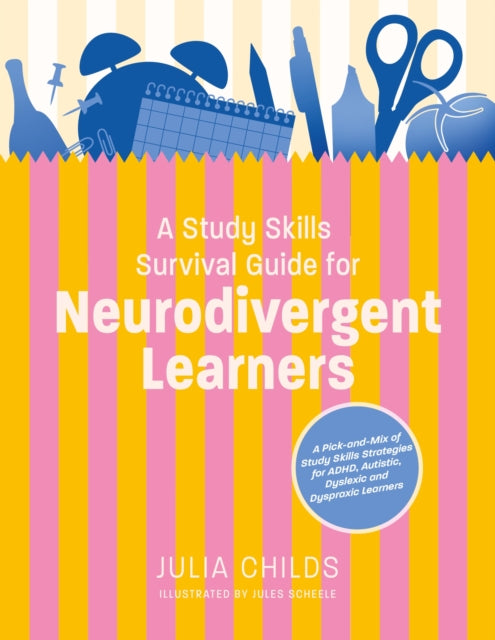
When it comes to studying, what works for one person may do nothing for another — and that's especially true for neurodivergent learners. A Study Skills Survival Guide for Neurodivergent Learners by Julia Childs is a practical, empowering workbook designed specifically for students who are ADHD, Autistic, Dyslexic, Dyspraxic, or AuDHD — including those with overlapping profiles.
How it helps
Rather than prescribing a fixed set of rules, this book takes a pick 'n' mix approach. Students are guided through a range of strategies and templates, trying out the methods most likely to suit their neurotype, skills, and how they experience the world. Over time, they build their own personalised toolkit — not just for their current studies, but for life.
Topics covered include organisation, notetaking, reading strategies, time management, revision, academic writing, and self-care — including how to recognise and manage burnout, which the author rightly frames as a study skill in itself. The large-format, illustrated design makes the book accessible and easy to navigate, even when concentration is in short supply.
Why it works in schools and colleges
- Covers multiple neurotypes in one resource — suitable for students with dyslexia, ADHD, autism, dyspraxia, and overlapping profiles, making it a practical choice for any SENCO or specialist teacher working across a range of needs.
- Student-led and self-directed — the pick 'n' mix format encourages independence and metacognition, supporting EHCPs and intervention plans focused on developing self-regulated learning.
- Templates included throughout — students can work directly in the book or use the downloadable resources, minimising preparation time for staff and reducing barriers for learners who struggle to create their own frameworks.
- Suitable from secondary through to higher education — written with college and university students in mind, it is also appropriate for motivated Year 10 and above, making it a versatile addition to a school's SEN resource library.
- Written by a credentialled specialist — author Julia Childs holds a Masters in Education with a focus on supporting autistic students' independence, and works directly with neurodivergent students in further and higher education. This is not a generic study guide; it reflects genuine expertise.
Who else it suits
Parents supporting neurodivergent teenagers through GCSEs, A Levels, or the transition to university will find this equally useful. The accessible writing style means students can work through it independently, without needing adult guidance at every step.
Ready to explore?
If you're looking for a study skills resource that genuinely reflects how neurodivergent brains work, this is a strong place to start. Browse the full description or get in touch with our team if you'd like to talk through whether it's right for your setting.
- Pick 'n' mix format — students select strategies based on their neurotype and personal experience, building a personalised study skills toolkit that fits their brain.
- Covers ADHD, AuDHD, Autism, Dyslexia and Dyspraxia — including overlapping profiles, making it one of the most inclusive study guides available.
- Topics include: organisation, notetaking, reading, time management, revision techniques, academic writing, self-care, and burnout management.
- Practical templates throughout — including timetables, summary frameworks, doodle boxes, and planning tools students can use directly in the book.
- Free downloadable resources — additional printable materials are available via the publisher's website.
- Large-format design — 278 x 214mm, illustrated throughout by Jules Scheele, making the content accessible and visually engaging.
- 256 pages — comprehensive without being overwhelming; structured for dipping in rather than reading cover to cover.
- Author credentials — written by Julia Childs, a neurodivergent study skills specialist and mentor with a Masters in Education focused on supporting autistic learners' independence.
- Format: Trade Paperback
- Publisher: Jessica Kingsley Publishers
- Published: September 2025
- Is this book suitable for someone who has more than one diagnosis — for example, both ADHD and dyslexia?
Yes. One of the key strengths of this book is that it addresses overlapping neurotypes. The author acknowledges that many neurodivergent people don't fit neatly into a single category, and the strategies are designed to work for combined profiles as well as individual ones. - Is this aimed at students or at the adults who support them?
Primarily at students themselves. It is written directly to the learner, in accessible, friendly language. However, teachers, SENCOs, and parents will find it a useful reference for understanding which strategies to signpost or support. - What age range is this suitable for?
It is primarily written for college and university students, but is well suited to motivated secondary school students from around Year 10 upwards. The content is relevant to anyone in formal education who is working towards exams or independent study. - Does the student need to read it from cover to cover?
No. The pick 'n' mix format means students can go straight to the sections most relevant to their current challenges — whether that's revision, organisation, or managing burnout. It is designed to be dipped into rather than read linearly. - Are there any accompanying resources?
Yes. The publisher provides free downloadable materials to complement the book, including printable templates. These are accessible via the Jessica Kingsley Publishers website. - Can this book be purchased in bulk for school or college use?
Yes. The Dyslexia Shop offers purchase orders and 30-day credit accounts for schools and educational institutions. Please contact our team at sales@thedyslexiashop.co.uk for bulk pricing enquiries.