

Ebury Publishing
Calm Your ADHD Brain : Your toolkit to manage spiralling thoughts
Calm Your ADHD Brain : Your toolkit to manage spiralling thoughts
SKU:BK2561
Couldn't load pickup availability


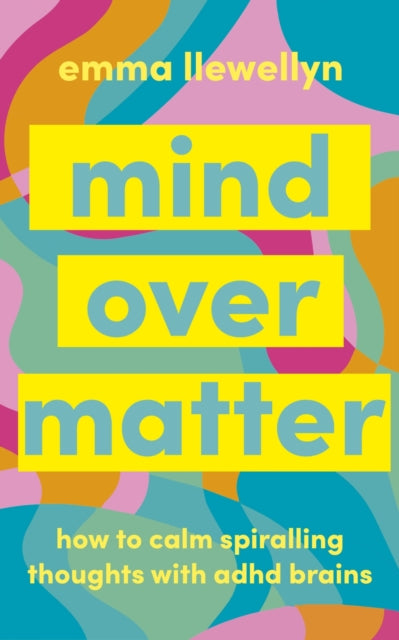
Rumination. Spiralling thoughts. The inability to let go of a comment made three days ago, or a conversation that might have gone wrong, or a task that looms larger every time you try to start it. For people with ADHD, this is not just occasional overthinking -- it is a near-constant feature of daily life. And for most of her life, Emma Llewellyn thought it was her fault.
Diagnosed with ADHD at thirty, Emma is now a content creator with over 360,000 followers on Instagram, known for her honest, validating, and practical take on neurodivergent life. Calm Your ADHD Brain is her first book: a warm, accessible, and genuinely useful toolkit for anyone whose ADHD brain has been telling them they are broken. Spoiler: they are not.
How it helps
The book starts by explaining the science -- why the ADHD brain is wired for rumination, how dopamine dysregulation and executive dysfunction interact to keep thoughts looping, and why simply being told to "stop overthinking" is not only unhelpful but actively counterproductive. From there, Emma moves through practical strategies that are grounded in her own lived experience and designed for ADHD brains specifically: bite-sized, easy to follow, and shaped around self-compassion rather than self-criticism.
The chapter structure covers understanding why the spiral happens, validation and acceptance as the first step, how to interrupt a spiral in the moment, identifying and limiting personal triggers, building more conscious daily habits, and maintaining progress over time. It is a complete framework, not a list of tips, and it has been written by someone who uses these strategies herself every day.
Why it works in schools and professional settings
- Directly addresses ADHD and emotional dysregulation: Rumination and spiralling thoughts are among the most debilitating but least-discussed aspects of ADHD. This book fills a real gap in the self-help shelf for ADHDers who struggle specifically with thought loops, catastrophising, and rejection sensitivity.
- Written in a format that works for ADHD brains: Bite-sized information, short chapters, and a conversational tone make this book genuinely usable for the people it is written for -- not just those who can sit down and absorb dense text.
- Supports emotional regulation goals in SEN provision: The tools Emma offers map onto the emotional regulation and self-regulation skills that form part of many EHCP outcomes and PSHE frameworks, making this a useful recommendation alongside clinical or school-based support.
- Backed by a large, engaged community: With over 360,000 Instagram followers, Emma's content already resonates widely. Parents, young adults, and students who follow her online will find this book a natural next step.
- Addresses co-occurring experiences: Emma has ADHD and autism, and the book acknowledges the complexity of neurodivergent experience -- including PMDD, anxiety, sensory overwhelm, and the ways these interact with ADHD -- making it relevant to a broad range of readers.
Who else it suits
This book is written for any adult who has ADHD and finds themselves stuck in thought loops they cannot escape. It is particularly well suited to those who have recently been diagnosed and are starting to make sense of patterns they have experienced for years, and to those who have tried other self-help approaches and found them too demanding, too abstract, or simply not designed for an ADHD brain.
Browse our full range of ADHD and neurodiversity titles for adults, or get in touch if you need help finding the right resources for your school, clinic, or personal journey.
- Written by Emma Llewellyn: British content creator, neurodiversity advocate, and ADHD and autism advocate with over 360,000 Instagram followers (@emmasmindovermatter). Diagnosed with ADHD at age 30.
- Focuses specifically on rumination and spiralling thoughts: A targeted toolkit for one of the most common and debilitating ADHD experiences, rather than a general ADHD guide.
- Structured as a complete framework: Covers the science of why ADHD brains spiral, validation and acceptance, in-the-moment interruption techniques, trigger identification, daily habits, and long-term strategies.
- Bite-sized and ADHD-friendly in format: Short chapters, easy-to-follow tips, and a warm, non-judgmental tone designed to be accessible for ADHD readers.
- Grounded in lived experience: Emma writes from her own daily experience of managing ADHD, making the content relatable and honest rather than theoretical.
- Addresses co-occurring conditions: Acknowledges the intersection of ADHD with autism, anxiety, PMDD, rejection sensitivity, and emotional dysregulation.
- Published by Vermilion (Ebury / Penguin Random House): A leading imprint for wellness and mental health non-fiction.
- Format: Paperback.
- Pages: 288.
- Dimensions: 215 x 135 x 22 mm.
- Weight: 290 g.
- Published: 12 February 2026.
- What's included: 1 x paperback book.
- What is this book specifically about?
It focuses on rumination and spiralling thoughts in people with ADHD -- the loops of overthinking, replaying conversations, catastrophising, and emotional spirals that many ADHDers experience but which are rarely the central focus of ADHD books. Emma explains why this happens neurologically and offers practical strategies for managing it. - Is this a workbook or a read-through book?
It is primarily a read-through book written in Emma's personal voice, but it is structured with clear chapters, practical tips, and strategies designed to be used in real life rather than just read and set aside. It is not a workbook with fill-in exercises, but it is action-oriented throughout. - Is this book suitable for someone who is newly diagnosed?
Yes. Emma explains the neuroscience behind spiralling in a clear, accessible way that does not assume prior knowledge. For someone newly diagnosed, it can help make sense of thought patterns they may have experienced for years without understanding why. - Who is Emma Llewellyn?
Emma Llewellyn is a British content creator and neurodiversity advocate. She has ADHD and autism and was diagnosed with ADHD at age 30. She shares honest, practical, and validating content about neurodivergent life to over 360,000 followers on Instagram under the handle @emmasmindovermatter. Calm Your ADHD Brain is her debut book. - Does the book address ADHD in women specifically?
Emma writes from her own experience as a woman with ADHD, and the book addresses experiences that are particularly common for women with the condition -- including PMDD, masking, rejection sensitivity, and the exhaustion of managing a neurodivergent brain in environments not designed for it. It is not exclusively written for women but will resonate strongly with that audience. - Is this book suitable to recommend alongside professional support?
Yes. It is designed as a self-help complement to therapy, diagnosis, or clinical support, not a replacement for it. Emma is clear throughout that the strategies she shares are from personal experience, and she encourages readers to seek professional input alongside the book where needed.