

Jessica Kingsley Publishers
Camille the Chameleon on Masking : How to stop masking and discover your awesome autistic self
Camille the Chameleon on Masking : How to stop masking and discover your awesome autistic self
SKU:BK2557
Couldn't load pickup availability


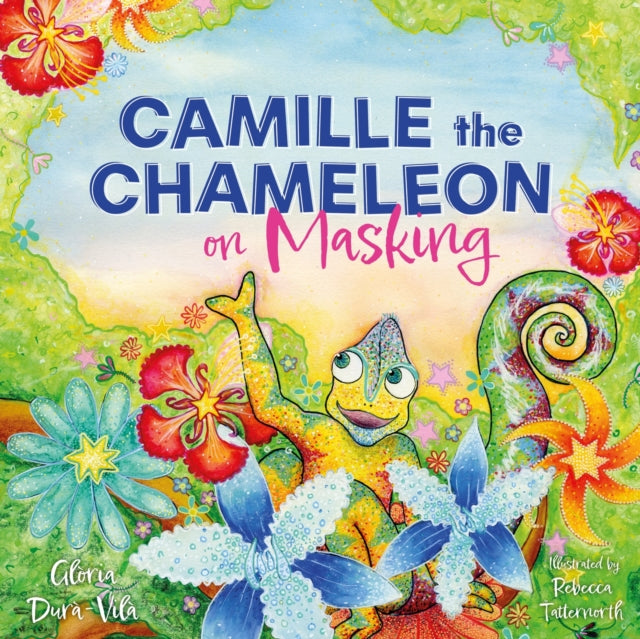
Autistic children are often skilled at camouflaging -- hiding their difficulties, suppressing their instincts, and performing a version of themselves that feels more acceptable to the world around them. Masking is common, but it takes a toll. Camille the Chameleon on Masking is a beautifully illustrated picture book for autistic children aged 6 and over that explores what masking feels like, why so many autistic children do it, and -- most importantly -- what it can feel like to stop.
How it helps
Through the warm, relatable voice of Camille, children are invited to recognise their own experiences in a way that is affirming rather than clinical. The book doesn't tell children what to do -- it shows them they're not alone, that their feelings make sense, and that being their authentic self is something worth working towards. Alongside Camille's story, readers meet other autistic children who share their own experiences of masking, helping to build a sense of community and shared understanding.
The text has been specifically noted as dyslexia friendly in its layout, making it accessible to a wider range of readers. The illustrations are vibrant and full of warmth, and the narrative tone throughout is gentle, honest, and empowering.
Why it works in schools and classrooms
- Supports understanding of masking in SEN provision: Masking is increasingly recognised as a significant factor in autistic children's mental health and wellbeing. This book gives schools a practical, child-accessible way to open that conversation.
- Written by a consultant child psychiatrist: Dr Glòria Durà-Vilà is Medical Lead for ASD at Surrey and Borders NHS Trust and an honorary lecturer at UCL, giving the content genuine clinical credibility that SENCOs and trust buyers can rely on.
- Suitable for use in EHCP reviews and intervention planning: The book's focus on self-awareness and authentic self-expression maps naturally onto social and emotional learning goals within EHCP frameworks.
- Accessible for a range of year groups: Recommended for ages 6 to 12, making it useful across KS1 and KS2 with appropriate support.
- Dyslexia-friendly text and layout: Noted on the back cover, this means the book can be used confidently with children who have co-occurring learning differences alongside their autism diagnosis.
Who else it suits
Parents of autistic children will find this book a helpful way to open conversations at home about masking, particularly for children who may not have the words to describe what they're experiencing. It can also be a reassuring read for young people who have recently received an autism diagnosis and are starting to make sense of their own behaviour and feelings.
If you'd like to discuss whether this title is right for your school or setting, our team is happy to help.
- Explores autism masking for children: Explains what masking is, why autistic children do it, and the importance of embracing authentic identity -- in language that is accessible and age-appropriate.
- Written by a consultant child psychiatrist: Dr Glòria Durà-Vilà, Medical Lead for ASD at Surrey and Borders NHS Trust and honorary lecturer at UCL, brings genuine clinical expertise to the content.
- Illustrated by Rebecca Tatternorth: Vibrant, full-colour illustrations throughout bring Camille's story to life.
- Dyslexia-friendly text and layout: Noted on the back cover -- accessible for children with co-occurring learning differences.
- Age suitability: Recommended for ages 6 to 12 (KS1 and KS2).
- Format: Hardback picture book.
- Pages: 40 pages, fully illustrated in colour.
- Dimensions: 250 x 250 x 8 mm.
- Weight: 380 g.
- Publisher: Jessica Kingsley Publishers.
- Published: 21 January 2025.
- Endorsed by: Professor Tony Attwood (autism expert and author), Dr Laura Hull and Helen Ellis (co-authors of Autism and Masking).
- What's included: 1 x hardback book.
- What age is this book suitable for?
The book is recommended for children aged 6 to 12. It works well as a read-aloud for younger children in this range and as an independent read for older ones. Teachers and parents can use it flexibly depending on the child's reading level and maturity. - What is masking, and why does this book address it?
Masking refers to when autistic children hide or suppress their autistic traits to fit in -- this might mean copying others' social behaviour, suppressing stims, or pretending to be fine when they're not. It is increasingly understood to have a significant impact on mental health and wellbeing. This book helps children recognise and name the experience in a safe, supportive way. - Is this book suitable for children who have just received an autism diagnosis?
Yes. The tone is warm and affirming rather than clinical, and it does not assume any prior knowledge. It can be a helpful first step for newly diagnosed children and their families. - Can this book be used in a classroom or group setting?
It works well as a class read or small group discussion book, particularly in PSHE sessions or as part of SEN support. The stories of different autistic children within the book offer multiple points of connection for young readers. - Is the text accessible for children with dyslexia?
Yes. The back cover specifically notes that the book has a dyslexia-friendly text and layout, making it suitable for children with co-occurring dyslexia or other reading difficulties alongside their autism. - Who wrote this book?
The text was written by Dr Glòria Durà-Vilà, a multi-award winning consultant child and adolescent psychiatrist who is Medical Lead for ASD at Surrey and Borders NHS Trust. The illustrations are by Rebecca Tatternorth.