


Autopress Education Ltd
Hungarian Number Frame - Pack of 10 Maths Intervention Frames
Hungarian Number Frame - Pack of 10 Maths Intervention Frames
SKU:TA2375
Couldn't load pickup availability


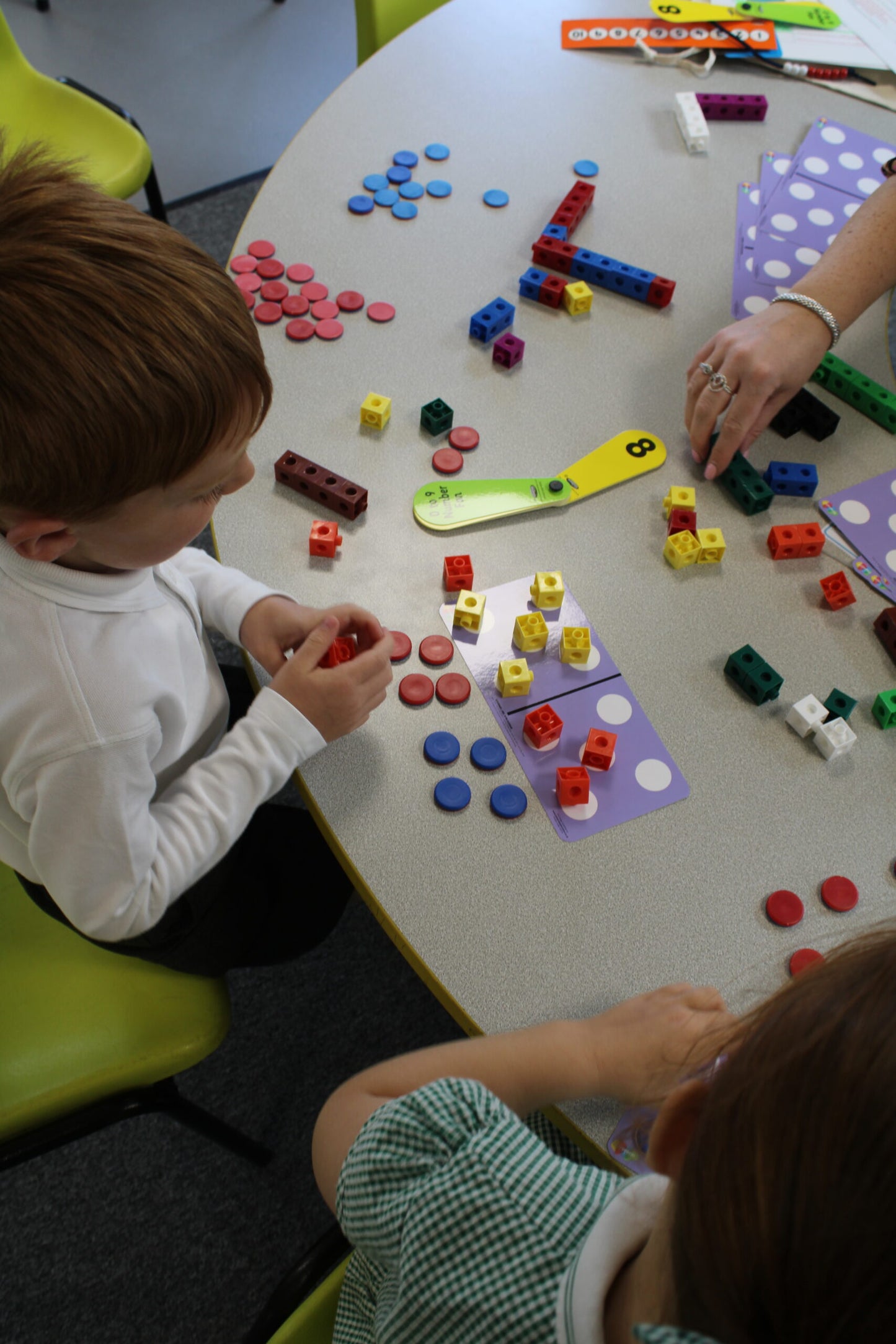
Autopress Education Hungarian Number Frame - Pack of 10 for Maths Intervention and Classroom Use
The Autopress Education Hungarian Number Frame is a structured maths resource designed to develop number sense, subitising, and early calculation skills in children. This pack contains 10 individual frames, each measuring 21cm x 10cm, suitable for use with counters or dry wipe pens. The Hungarian Number Frame is a core resource in evidence-based maths intervention programmes including Maths Recovery and Numbers Count, and is produced in the UK by Autopress Education, a trusted publisher of classroom numeracy tools.
What Is a Hungarian Number Frame?
A Hungarian Number Frame is a rectangular grid arranged in two rows of five spaces - a 2x5 layout representing the numbers 0 to 10. It takes its name from the Hungarian tradition of structured mathematics education that emphasises visual number patterns. Each row of five spaces maps directly onto one hand's worth of fingers, making the relationship between the physical gesture of counting and the visual representation of number immediately clear to children.
The 2x5 structure supports subitising - the ability to recognise quantities instantly without counting one by one. Because humans are naturally good at recognising groups of five, the Hungarian frame allows pupils to see at a glance that 7 is 5 and 2 more, or that 8 is 5 and 3 more, building deep number sense rather than procedural counting.
How It Helps
The Hungarian Number Frame supports a wide range of early number concepts and skills. Pupils can place counters in the spaces to represent numbers from 0 to 10, building and breaking apart quantities to explore number bonds, part-part-whole relationships, and the relationship between addition and subtraction. The write-and-wipe surface allows the same activities to be carried out with a dry wipe pen, making the frame reusable and suitable for individual, paired, or small-group work.
The structured 2x5 layout is particularly valuable for pupils with dyscalculia, who often struggle with the abstract nature of number and benefit from concrete, visual representations that make numerical relationships physically visible. The frame gives dyscalculia a scaffold that supports the transition from concrete manipulation to pictorial and then abstract understanding - the concrete-pictorial-abstract (CPA) progression central to evidence-based maths teaching.
Why It Works Well in Schools and Classrooms
- Core resource for Maths Recovery and Numbers Count: the Hungarian Number Frame is a specified resource in both the Maths Recovery and Numbers Count structured intervention programmes, widely used in UK primary schools for early maths intervention. Schools running either programme will recognise and value this resource immediately.
- Supports subitising and number sense: the 2x5 layout enables pupils to instantly perceive quantities as structured patterns rather than counting individual units, building the foundational number sense that underpins all subsequent calculation.
- Flexible whole-class or intervention use: with 10 frames per pack, one pack equips a full small-group intervention session or provides enough for paired work in a class. Additional packs can be purchased to equip a full class for a single per-pupil cost of 35p per frame.
- Counters or dry wipe - two modes of use: the dual capability means the frame works as a concrete manipulative with physical counters and as a pictorial tool with a dry wipe pen, supporting the CPA progression within a single resource.
- Particularly valuable for dyscalculia support: the visual, structured representation of number that the Hungarian frame provides is specifically recommended for pupils with dyscalculia, helping them build reliable number sense through a concrete anchor point.
For Home Use
The Hungarian Number Frame is a practical and affordable resource for parents supporting early maths learning at home, particularly for children with dyscalculia or maths difficulties. Its 21cm x 10cm size is compact enough for kitchen-table use, and the dry wipe surface means it can be used repeatedly without needing counters. It pairs well with any structured home numeracy programme or as a supplement to school-based intervention work.
The Evidence Behind Structured Number Frames
Structured number frames - including Hungarian Number Frames and ten frames - are among the most researched and widely recommended concrete manipulatives in early mathematics education. The ability to subitise structured arrangements is a strong predictor of later mathematical attainment, and visual tools that support this skill are recommended by the Education Endowment Foundation (EEF) as part of a high-quality early maths curriculum. For pupils with dyscalculia, the British Dyslexia Association (BDA) and specialist maths educators consistently recommend concrete and visual representations as a foundation for number understanding.
Ready to Order?
Add to your basket above. Each pack contains 10 frames. For use with counters or a dry wipe pen (both sold separately).
- Hungarian Number Frame with 2x5 layout: two rows of five spaces, supporting subitising and structured representation of numbers from 0 to 10
- Dual use: can be used with physical counters (e.g. two-colour counters) or with a dry wipe pen - supporting both concrete and pictorial modes of working
- Pack of 10 frames: sufficient for a full small-group intervention session or paired classroom work; cost per frame is 35p + VAT
- Individual frame size: 21cm x 10cm
- Core resource for: Maths Recovery and Numbers Count structured intervention programmes
- Supports: subitising, number bonds to 5 and 10, part-part-whole relationships, early addition and subtraction, dyscalculia intervention
- SKU / Product Code: HF07
- Brand/Publisher: Autopress Education
- Country of origin: United Kingdom
- What is a Hungarian Number Frame?
A Hungarian Number Frame is a structured maths resource arranged in two rows of five spaces - a 2x5 grid representing the numbers 0 to 10. Its design exploits the human ability to quickly recognise groups of five, helping pupils see numbers as patterns rather than individual counted units. It is used to develop subitising, number bonds, part-part-whole understanding, and early addition and subtraction skills in primary-aged children. - How is the Hungarian Number Frame used in the classroom?
The Hungarian Number Frame is used to build and represent numbers from 0 to 10 using counters placed in the spaces. Pupils can build a number, break it apart to explore bonds, add to it, or remove from it to practise subtraction. The 2x5 structure makes the relationship between numbers and groups of five visually clear, supporting subitising and number sense. It is also used with a dry wipe pen as an alternative to physical counters, where pupils draw dots or marks in the spaces instead. - Is the Hungarian Number Frame suitable for pupils with dyscalculia?
Yes. The Hungarian Number Frame is particularly recommended for pupils with dyscalculia, who often struggle with the abstract nature of number and benefit from concrete, visual tools that make numerical relationships physically visible. The structured 2x5 layout provides a consistent visual anchor for numbers, supporting the transition from concrete manipulation to pictorial and eventually abstract understanding - the concrete-pictorial-abstract progression central to dyscalculia intervention. - Which intervention programmes use the Hungarian Number Frame?
The Hungarian Number Frame is a core resource in both Maths Recovery and Numbers Count - two evidence-based structured maths intervention programmes widely used in UK primary schools. Schools running either programme will use this resource as part of their standard materials. It is also used in general early years and KS1 maths teaching as a subitising and number sense tool. - Can the Hungarian Number Frame be used at home?
Yes. The Hungarian Number Frame is a practical home resource for parents supporting early maths learning, particularly for children receiving maths intervention at school. Its compact size (21cm x 10cm) is suitable for kitchen-table use, and the dry wipe surface means it can be used repeatedly. Using the same resource at home that the child uses in school supports consistency and reinforces learning.