

Taylor & Francis Ltd
Neurodivergence and the Criminal Justice System - Autism & ADHD Guide
Neurodivergence and the Criminal Justice System - Autism & ADHD Guide
SKU:BK2588
Couldn't load pickup availability


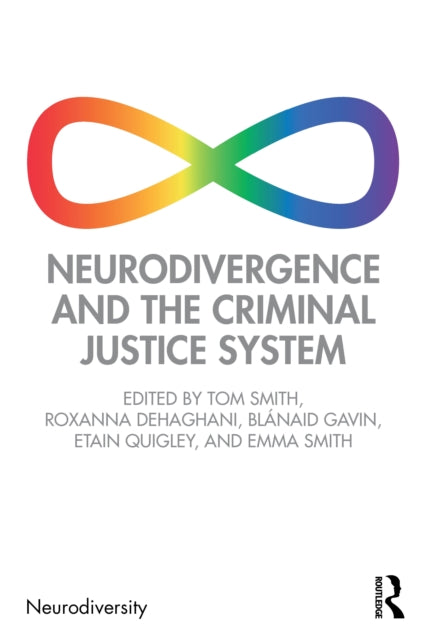
Neurodivergence and the Criminal Justice System
Neurodivergence and the Criminal Justice System is an edited academic volume for criminal justice professionals, including police officers, legal practitioners, probation staff and prison staff, who need a clearer understanding of how autistic adults and adults with ADHD experience the criminal justice system in England and Wales. It is edited by Tom Smith, Roxanna Dehaghani, Blánaid Gavin, Etain Quigley and Emma Smith, published by Routledge, an imprint of Taylor and Francis.
The book synthesises current academic research on neurodivergence within policing, court proceedings and custodial settings, and sets out the practical challenges neurodivergent adults face as both victims of crime and as accused persons. It gives professionals guidance for adapting their approach at each stage of the justice process, from initial police contact through to court and prison, and identifies where current practice and policy still fall short.
For criminal justice professionals
- Brings together current academic research on neurodivergence and criminal justice into a single professional reference text.
- Addresses practical, day-to-day scenarios across policing, court proceedings and custody, not just theory.
- Supports employers and teams meeting their duties under the Equality Act 2010 when working with neurodivergent colleagues, witnesses, suspects and defendants.
- Written by an editorial team specialising in criminal justice, vulnerability and neurodiversity research, suited to professional development and organisational reference libraries.
For autistic adults, the book addresses how sensory environments, communication style and the unpredictability of police, court or custodial settings can create additional barriers within the justice system. For adults with ADHD, it considers how attention, impulse control and executive function differences can affect interviews, court proceedings and understanding of process, and what professionals can do to adjust their practice accordingly.
As an edited academic text, the guidance draws on published research into neurodivergence and the criminal justice system, giving practitioners an evidence-based starting point rather than anecdotal advice.
If your role involves supporting autistic adults or adults with ADHD as they move through the criminal justice system, this is a reference text designed to be used alongside existing training and policy, not to replace it.
- Edited academic volume by five specialists: Tom Smith, Roxanna Dehaghani, Blánaid Gavin, Etain Quigley and Emma Smith.
- Covers neurodivergent adults, including autistic adults and adults with ADHD, as both victims and accused persons within the criminal justice system.
- Addresses practice across policing, court proceedings and custodial settings in England and Wales.
- Combines academic research with practical recommendations for professionals.
- Publisher: Routledge (Taylor and Francis Group).
- Format: Paperback.
- ISBN: 9781041070856.
- Written specifically for the justice system context. Covers autistic adults and adults with ADHD across policing, courts and custody, not general workplace neurodiversity.
- Research-led, not anecdotal. Synthesises current academic literature into practical guidance for professionals.
- Supports Equality Act 2010 duties. Helps criminal justice employers and staff understand reasonable adjustments for neurodivergent colleagues and members of the public.
- Trusted UK specialist. Supplied by The Dyslexia Shop, a UK retailer focused entirely on dyslexia and learning differences.
Delivery and Returns
Standard UK delivery applies. See our Delivery and Returns page for full details.
- What is Neurodivergence and the Criminal Justice System about?
It is an edited academic guide for professionals on how neurodivergent adults, including autistic adults and adults with ADHD, experience the criminal justice system in England and Wales. It covers policing, courts and custody, as both victims and accused persons. - Is this book useful for professionals working with autistic adults in the justice system?
Yes, it addresses how sensory environments, communication style and unpredictability in police, court and custodial settings can create barriers for autistic adults. It gives practical guidance for adapting professional practice at each stage. - Does this book cover ADHD in a criminal justice context?
Yes, it considers how attention, impulse control and executive function differences associated with ADHD can affect interviews, court proceedings and understanding of process. It sets out practical adjustments professionals can make. - Who is this book written for?
It is written for criminal justice professionals, including police officers, legal practitioners, probation staff and prison staff, working with neurodivergent adults. It is an academic reference text rather than a general public guide. - Is this suitable for workplace training on neurodiversity in criminal justice settings?
Yes, it can support workplace training and professional development, helping employers and staff meet their duties under the Equality Act 2010. It combines academic research with practical, role-based guidance.