

SAGE Publications Ltd
Neurodiversity in the Literacy Classroom: ADHD & Autism SEND Guide
Neurodiversity in the Literacy Classroom: ADHD & Autism SEND Guide
SKU:BK2587
Couldn't load pickup availability


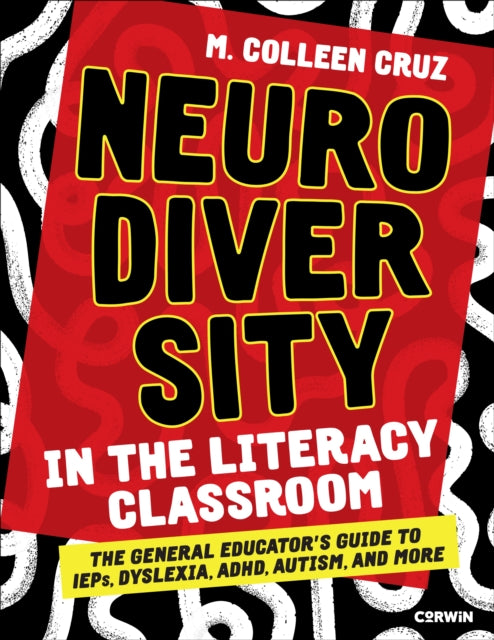
Neurodiversity in the Literacy Classroom: The General Educator's Guide to IEPs, Dyslexia, ADHD, Autism, and More
Neurodiversity in the Literacy Classroom is a practical guidebook by M. Colleen Cruz, published by Corwin, an imprint of SAGE Publications, for classroom teachers, SENCOs and parents who want clear, workable strategies for teaching literacy to autistic pupils and pupils with ADHD. It combines research-backed guidance on Individual Education Plans (the US equivalent of the UK's Education, Health and Care Plan process) with day-to-day classroom and home strategies that do not require a specialist background in special educational needs.
The book is built around Universal Design for Learning principles and a strengths-based approach, meaning it focuses on what autistic learners and learners with ADHD can already do well, and how to build reading and writing instruction around those strengths rather than around deficit. It includes practical tools, checklists and frequently asked questions designed to be used immediately in a busy classroom or at the kitchen table, alongside contributions from other specialists in the field.
For schools
- Gives whole-class strategies a general classroom teacher can use without needing to be a SEND specialist, supporting Quality First Teaching and the graduated approach.
- Includes practical tools and checklists that translate directly into lesson planning for literacy across primary and secondary settings.
- Clarifies the IEP process in detail, which SENCOs can use as a reference point when comparing US practice to the UK's EHCP and SEND Code of Practice framework.
- Suitable for staff CPD, SENCO reference shelves, and trust-wide purchasing where a single accessible text is needed for several year groups.
For parents and home learning
- Explains, in plain language, why an autistic child or a child with ADHD may find literacy lessons harder in a mainstream classroom, without placing blame on the child.
- Gives parents a shared vocabulary with teachers when discussing an IEP-style plan, EHCP, or classroom support at review meetings.
- Offers strengths-based framing that parents can use at home to reduce frustration around reading and writing homework.
- Written to be read alongside a child's teacher, so home and school strategies stay consistent.
For autistic learners, the book addresses common literacy barriers such as sensory sensitivities in the classroom, difficulty with unpredictable or open-ended reading and writing tasks, and the need for clear, consistent routines. For learners with ADHD, it focuses on sustaining attention through longer literacy tasks, breaking writing down into manageable steps, and using movement or structure to support focus. The guide also includes dedicated content on dyslexia, so schools and families dealing with overlapping needs are not left without guidance.
The strategies in the book are grounded in Universal Design for Learning, an approach increasingly referenced in UK inclusive teaching practice as a way of designing lessons that work for the whole class rather than retrofitting adjustments for individual pupils.
If you support autistic pupils or pupils with ADHD in literacy, whether from a staffroom or a kitchen table, this guide is written to be used straight away rather than read once and shelved.
- Author: M. Colleen Cruz, an experienced educator writing for general classroom teachers rather than SEND specialists alone.
- Covers dyslexia, ADHD and autism within a single literacy-focused guide, with dedicated sections for each.
- Explains Individual Education Plan (IEP) processes in depth, useful as a comparison reference alongside the UK's EHCP framework.
- Built around Universal Design for Learning principles for whole-class inclusive teaching.
- Strengths-based approach to teaching literacy to neurodivergent learners.
- Includes practical tools, checklists and frequently asked questions for immediate classroom or home use.
- Features contributions from additional specialists in the field.
- Publisher: Corwin, an imprint of SAGE Publications.
- Format: Paperback.
- Dimensions: approximately 279 x 215mm.
- Built for the general classroom teacher, not just the specialist. No SEND background is assumed, so any teacher can pick it up and start applying it to literacy lessons.
- Strengths-based, not deficit-based. Frames autism and ADHD around what pupils can already do well in literacy, rather than only what they find difficult.
- Usable the same day, in class or at home. Includes practical tools, checklists and FAQs designed for immediate use, not just theory.
- From a specialist UK retailer. Supplied by The Dyslexia Shop, a UK retailer focused entirely on dyslexia and learning differences.
Compatibility
Written primarily for a US educational context, using US terminology such as "IEP" and "general educator". UK readers should read IEP references alongside their own school's EHCP and SEND Code of Practice processes rather than as a direct UK equivalent.
Delivery and Returns
Standard UK delivery applies. See our Delivery and Returns page for full details.
- What is Neurodiversity in the Literacy Classroom by M. Colleen Cruz about?
It is a practical guide for teachers and parents on supporting autistic pupils and pupils with ADHD during literacy lessons. It combines Universal Design for Learning principles with strengths-based classroom strategies and IEP guidance. - Is this book suitable for autistic learners in a mainstream classroom?
Yes, it includes dedicated strategies for autistic learners, focusing on sensory needs, predictable routines, and building on individual strengths during reading and writing tasks. It is written for general classroom teachers rather than specialists only. - Does this book help with teaching literacy to pupils with ADHD?
Yes, it includes specific strategies for pupils with ADHD, such as breaking writing tasks into manageable steps and sustaining attention through longer literacy activities. These sit alongside its Universal Design for Learning approach. - Is this book suitable for use in UK schools, given it uses US terminology like IEP?
The book is written primarily for a US educational context and uses US terms such as IEP rather than the UK's EHCP. UK SENCOs and teachers can still apply its classroom literacy strategies, reading the IEP sections as a comparison reference. - Who is this book written for?
It is written for general classroom teachers, SENCOs and parents, not only for specialist SEND staff. No prior specialist knowledge of autism or ADHD is assumed. - Can parents use this book alongside their child's school?
Yes, the strengths-based strategies are written in plain language so parents can use them at home and discuss them with their child's teacher or SENCO for consistency between school and home. - Does this book only cover autism and ADHD, or does it cover other learning differences too?
It also includes dedicated content on dyslexia alongside its autism and ADHD sections, making it a broader neurodiversity resource for literacy teaching rather than a single-condition guide.